Cognition-Emotions

Timescapes of non-human experience

By June 29, 2026No Comments

Document type: scientific review published in Trends in Cognitive Sciences

Authors: Singhal I, Birch J, Seth A

Abstract in French (translation): “Temporal Landscapes” of Nonhuman Experience
How can we scientifically study nonhumanexperiences? Given the substantial differences in sensory capabilities and the intimate nature of consciousness, this question remains open. In this review, we propose an approach that allows us to empirically substantiate a key characteristic of experience: its temporal structure, or “temporal landscape .” Perceptual contents follow systematic temporal principles—synchronization, revision, and persistence—are sampled through “attentional windows,” and exhibit varying degrees of stability. These principles can be explored through temporal illusions and experimental paradigms. We conceptualize an animal’s temporal landscape in terms of five key windows, all of which are experimentally testable, and analyze data from different animal species to highlight the diversity of temporal landscapes. Together, these ideas lay the groundwork for a research program aimed at comparing the temporal “Umwelts” of nonhuman animals.

Preview:

Within the framework of the European Union's Common Agricultural Policy (CAP), the Ministry of Agriculture, Agri-food and Food Sovereignty (MAAFS) commissioned an evaluation of the impact of the CAP Strategic Plan (CSP) on animal welfare in France [...] This evaluation was conducted from a thematic perspective focusing on animal welfare and covers the years 2023 and 2024, corresponding to the first two effective years of programme implementation. The evaluation work makes it possible to analyse the contribution of CAP interventions to animal welfare, as well as their coherence and complementarity with other relevant measures. The evaluation was carried out over a 12-month period (January 2025-January 2026) and structured into three phases: the scoping phase (January-March 2025), the data collection and analysis phase (April-September 2025), and the finalisation and recommendations phase (October 2025-January 2026). [...]
How can we investigate non-human experiences scientifically? Given substantial differences in sensory abilities and the private nature of consciousness, this remains an open question. In this review, we propose a way to gain empirical traction on one key feature of experience: its temporal structure, or ‘timescape’. Perceptual contents follow systematic temporal principles—synchronisation, revision, and persistence—and are sampled across attentional windows and vary in stability. These principles can be explored through temporal illusions and experimental paradigms. We conceptualise an animal’s timescape in terms of five key windows, all of which are experimentally testable, and analyse evidence across animal species to highlight varying timescapes. Together, these ideas lay the foundations for a research programme comparing the temporal Umwelts of non-human animals.

Publication that led to an article (in English) in *Science* on June 18, 2026: Do animals perceive time differently from humans?
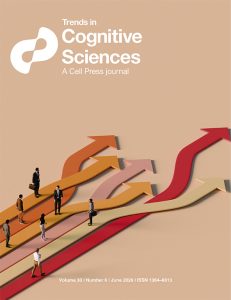
 

Excerpt from the Trends in Cognitive Sciences website