Cognition-emotionsAnimal husbandry and human-animal relationshipsAnimal welfare assessment and labelling

Fish welfare in a changing world: New developments and current challenges

Document type: scientific Document type: published in Journal of Fish Biology 

Authors: Planellas, S., Saraiva, J. L., Gonçalves-de-Freitas, E., Arechavala-Lopez, P., Bovenkerk, B., Breen, M., Cooke, S. J., Føre, M., Northwood, L., Stien, L. H., Kadri, S., Noble, C., Nilsson, J., Rodriguez, F., Salas, C., Sandøe, P., & van deVis, H. 

Abstract in French (translation): Fish welfare in a changing world: new advances and current challenges
The welfare of
non-human animals is at the heart of ethical debates on the use of animals, and attention to fish welfare continues to grow in the fields of research, aquariums, aquaculture, and fisheries. This article reviews current theoretical approaches to animal welfare as well as recent advances in defining and assessing fish welfare since the seminal paper by Huntingford et al. (2006; J Fish Biol 68: 332–372), highlighting the growing role of cognitive and affective processes. It also addresses the concept of positive welfare and some current research advances in this field. Methods for measuring, monitoring, and assessing welfare using outcome- and input-based indicators are described, ranging from practical operational tools to laboratory measures. Welfare concerns in wild fisheries are examined in relation to stress, flesh quality, and sustainability, including the welfare of released fish. Recent advances in neurobiology, cognition, and pain perception in fish are summarized, along with technological innovations that improve the monitoring and management of welfare. This article also explores the relationship between fish welfare, sustainability, public concerns, and consumer demand, as well as legal and moral recognition in different contexts, situating fish welfare within the “One Health” and “One Welfare” frameworks that link animal welfare, responsible environmental management, and human well-being. Current challenges include climate change, cultural factors, and the interpretation of fish sensitivity and cognition.

Preview: The welfare of non-human animals is central to ethical discussions on animal use, with increasing attention to fish welfare across research, aquaria, aquaculture, and fisheries. This paper reviews current theoretical approaches to animal welfare and recent advances in defining and assessing fish welfare since the seminal paper by Huntingford et al. (2006; J Fish Biol 68: 332–372), highlighting the growing role of cognitive and affective processes. It also includes the concept of positive welfare and some of the current research advances in this field. Methods for measuring, monitoring and assessing welfare via the utilisation of outcome- and input-based indicators are outlined, ranging from practical operational tools to laboratory-based measures. Welfare concerns in wild-capture fisheries are examined in relation to stress, flesh quality and sustainability, including the welfare of released fish. Recent advances in fish neurobiology, cognition and pain perception are summarised, together with technological innovations that enhance welfare monitoring and management. The paper also explores the relationship between fish welfare, sustainability, public concerns and consumer demand, and legal and moral recognition across contexts, situating fish welfare within the ‘One Health’ and ‘One Welfare’ frameworks that link animal welfare, environmental stewardship and human well-being. Ongoing challenges include climate change, cultural factors and the interpretation of fish sentience and cognition among others.
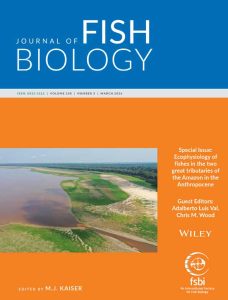



Excerpt from the Journal of Fish Biology website